

- Published on
AI Agent vs Chatbot: How to Tell You're Leaking Conversions
TL;DR
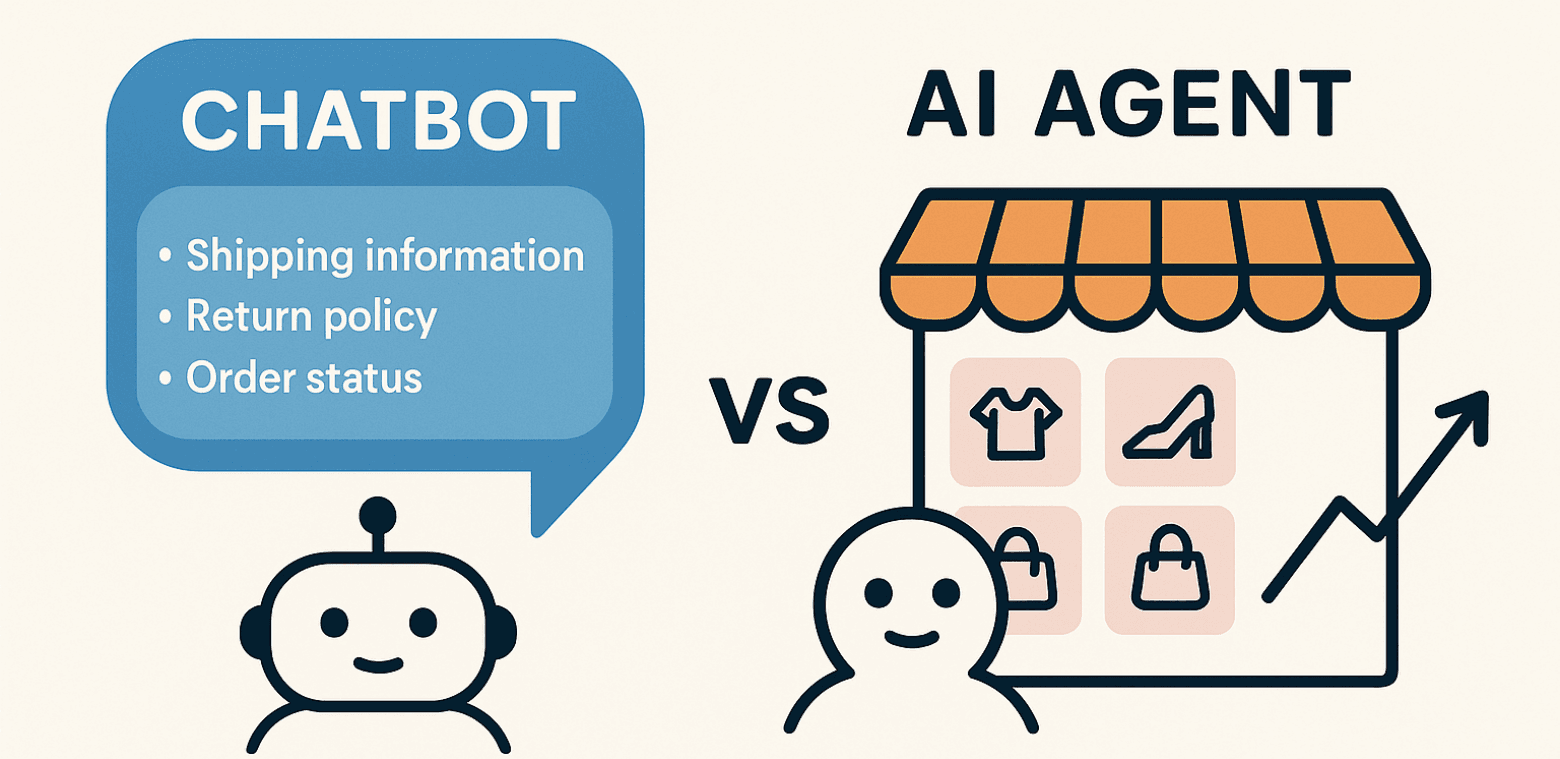
Chatbots answer questions; AI agents drive decisions and sales. This post explains why high chat volume with flat conversion means you're leaking revenue: chatbots are FAQ deflectors with no cart/catalog context, while agents see catalog, cart, promos, and history and can add to cart and close. Includes a 5-minute self-check, funnel-stage fixes (discovery, consideration, checkout), and how to start without breaking what works. If your chatbot vanished and nothing would change—you need an agent.
- Authors

- Name
- Anna Moroz
- Shopify Architect
There's a familiar pattern in e-commerce that nobody likes to talk about.
You launch a shiny new chatbot. The widget looks great. The dashboard shows hundreds of conversations. Your support team is a bit less overloaded.
And yet, when you open your revenue report… nothing really changes.
The problem isn't that chat is a bad idea. It's that most brands are still running what is essentially a glorified FAQ in a chat bubble. Meanwhile, what actually moves the needle in 2026 is something much closer to a digital sales associate: an AI agent that lives inside your store, understands what's going on, and can take action.
At a high level, the difference is simple:
chatbot = answers questions; AI agent = drives decisions and sales.
Once you see that difference, it becomes painfully obvious where conversions are leaking.
When a Chatbot Hits Its Ceiling
Traditional chatbots were never designed to sell. They were built to deflect support tickets and keep people away from your inbox.
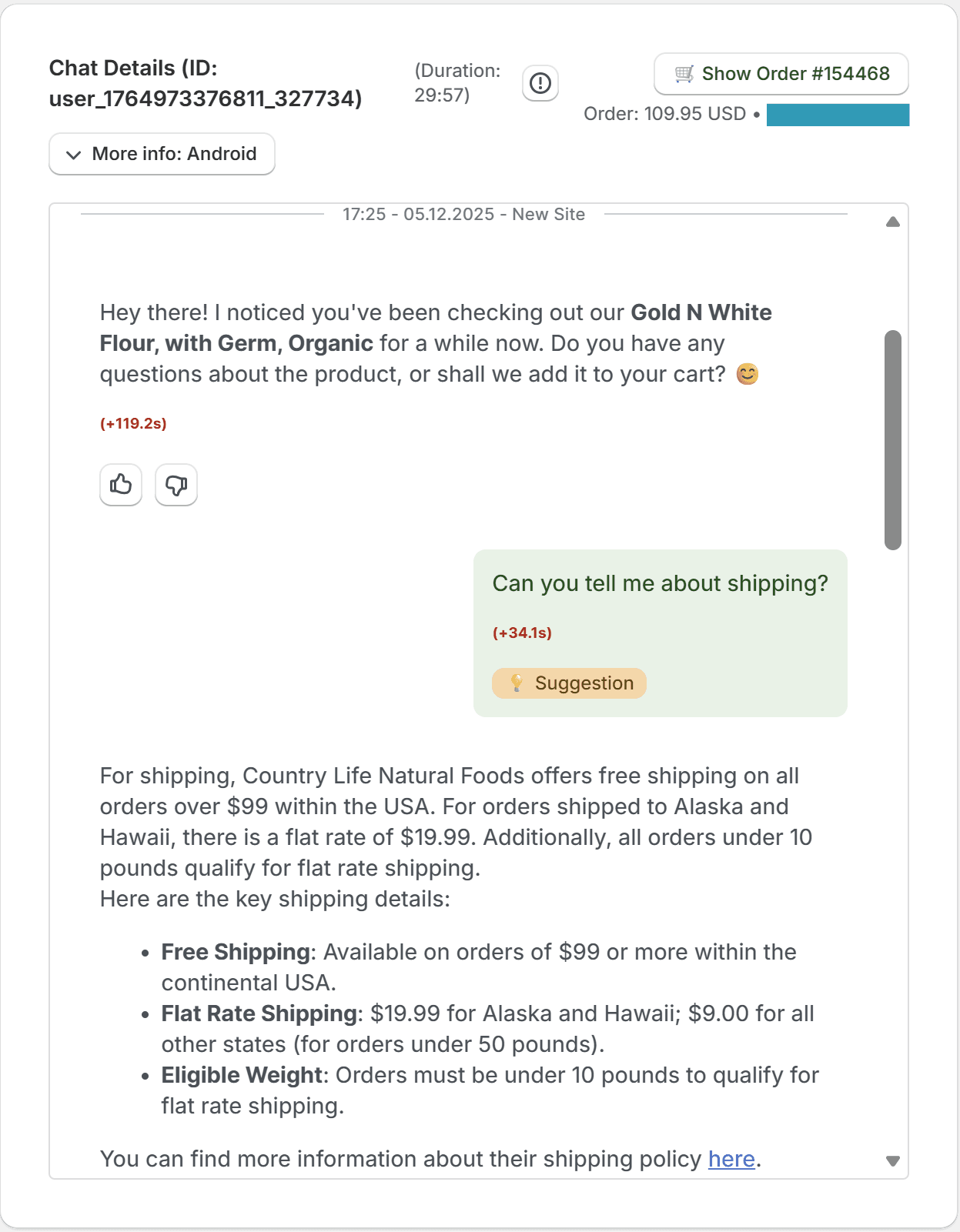
Most of them still work exactly like that. Under the hood, they're rule-based flows, decision trees, and keyword triggers wrapped in friendly copy. Ask about "shipping" and you get a nicely formatted paragraph. Ask about "returns" and you get another. If you're lucky, there's a light LLM layer that makes those answers sound less robotic.
What they don't really see is your store.
They don't know what's in the customer's cart, what they've been browsing, what's out of stock, which products pair well, or which promotion is actually valid for this specific user. They're answering in a vacuum.
That's why they're perfectly adequate for:
- "Where's my order?"
- "What's your shipping policy?"
- "What's your return window?"
…but quietly useless when the question behind the question is:
"Should I trust you enough to buy this from you right now?"
A chatbot points to information. A seller helps someone make a decision. That gap is where conversions go to die.
What an AI Agent Really Is
An AI agent starts where a chatbot stops. It doesn't just sit on top of your website; it's wired into the machinery of your store.
It can see:
- The product catalog, with attributes, upsells, bundles, and stock levels.
- The cart: what's already inside, the order value, what's missing.
- Valid promotions and discounts that could apply right now.
- Session and order history: what this person has viewed, compared, and abandoned.
So when a visitor says,
"I need a gift for my sister, under $80, she has sensitive skin,"
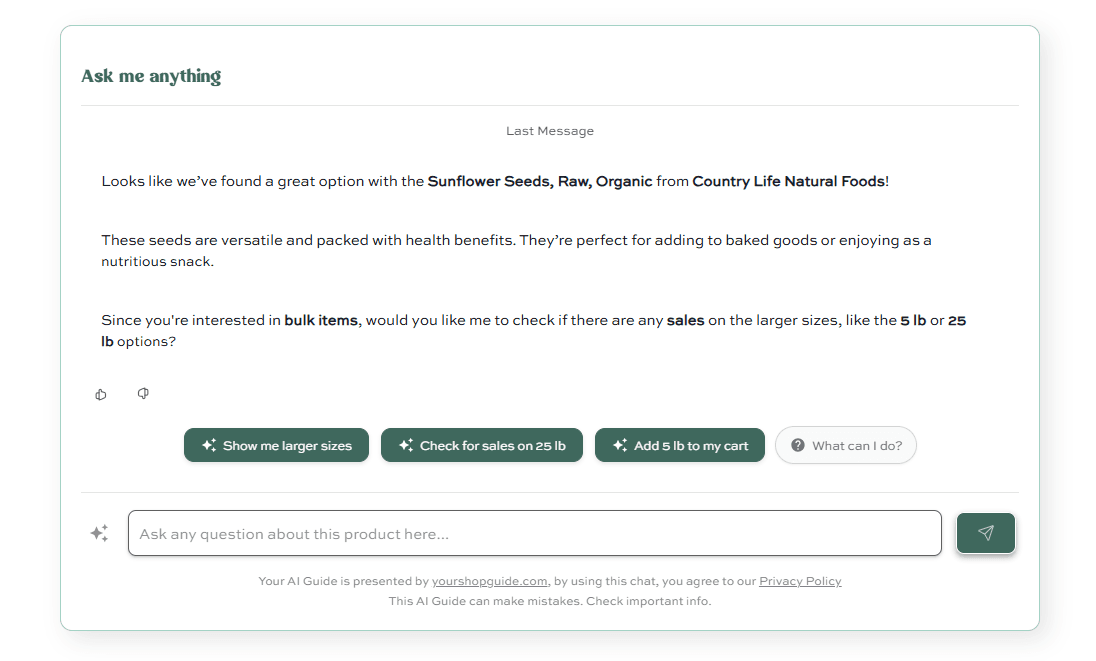
a chatbot will throw a category page at them. An AI agent will narrow down a handful of options, explain the trade-offs, and then ask:
"Would you like me to add this one to your cart?"
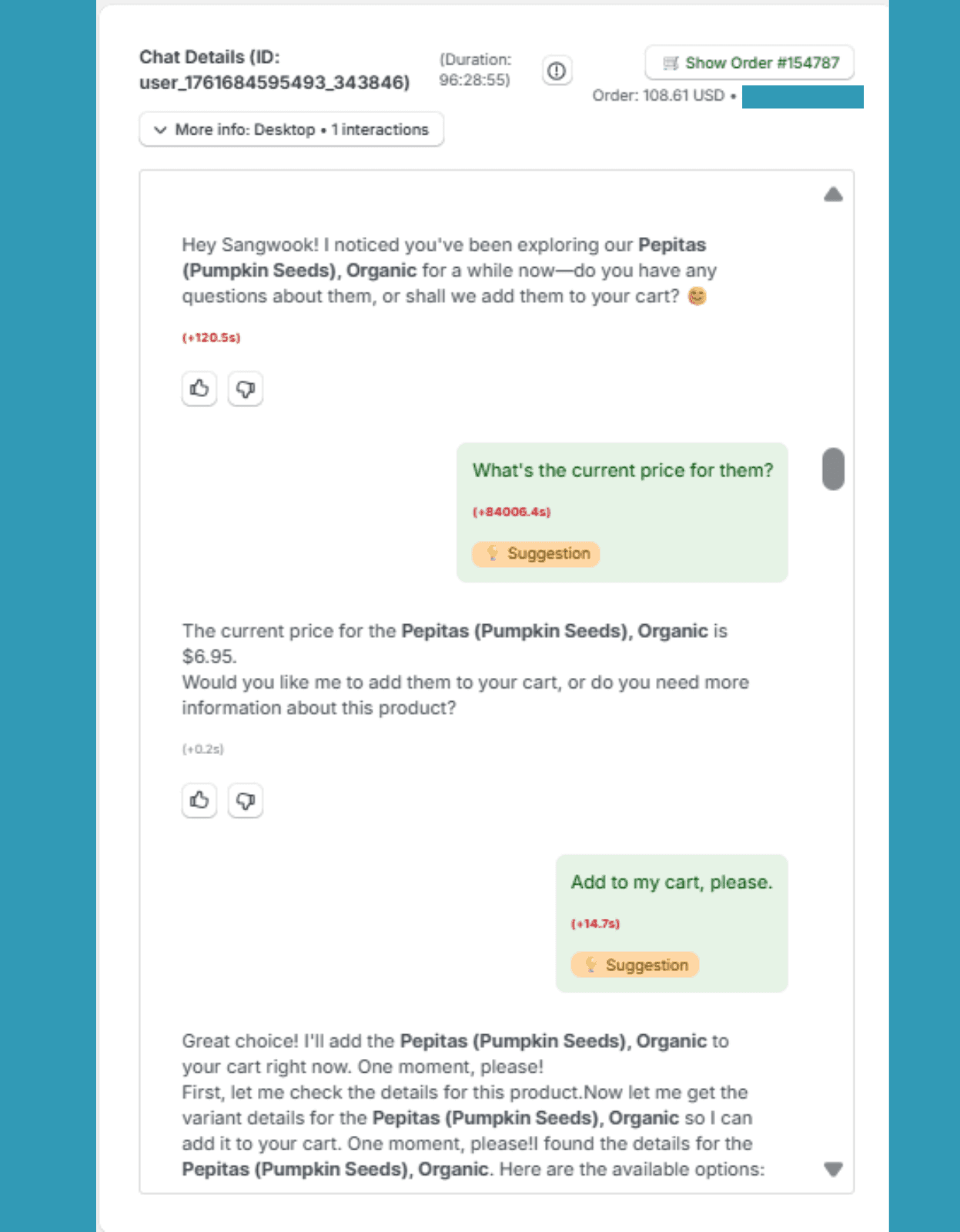
From that moment, it's not just "answering questions" anymore. It's operating like a sales associate: understanding context, offering relevant options, and then taking concrete actions, adding items to cart, applying promos, and nudging the shopper back to checkout if they drift away.
That's the core shift: from talking about the store to acting inside the store.
How to Tell Your Chatbot Is Quietly Leaking Conversions
You don't need a complex attribution model to spot the problem. A few patterns usually show up very quickly.
First, you see a lot of chat volume… but very little movement in key metrics. Conversations are happening, but they're not translating into more "Add to cart" clicks, higher conversion rate, or increased average order value. The window dressing is new; the numbers are the same.
Second, many interactions end in some polite version of "we'll get back to you." The bot runs out of road and hands the user off to an email address or a contact form. From a shopper's point of view, that's a dead end. They came ready to decide; instead, they're being told to wait.
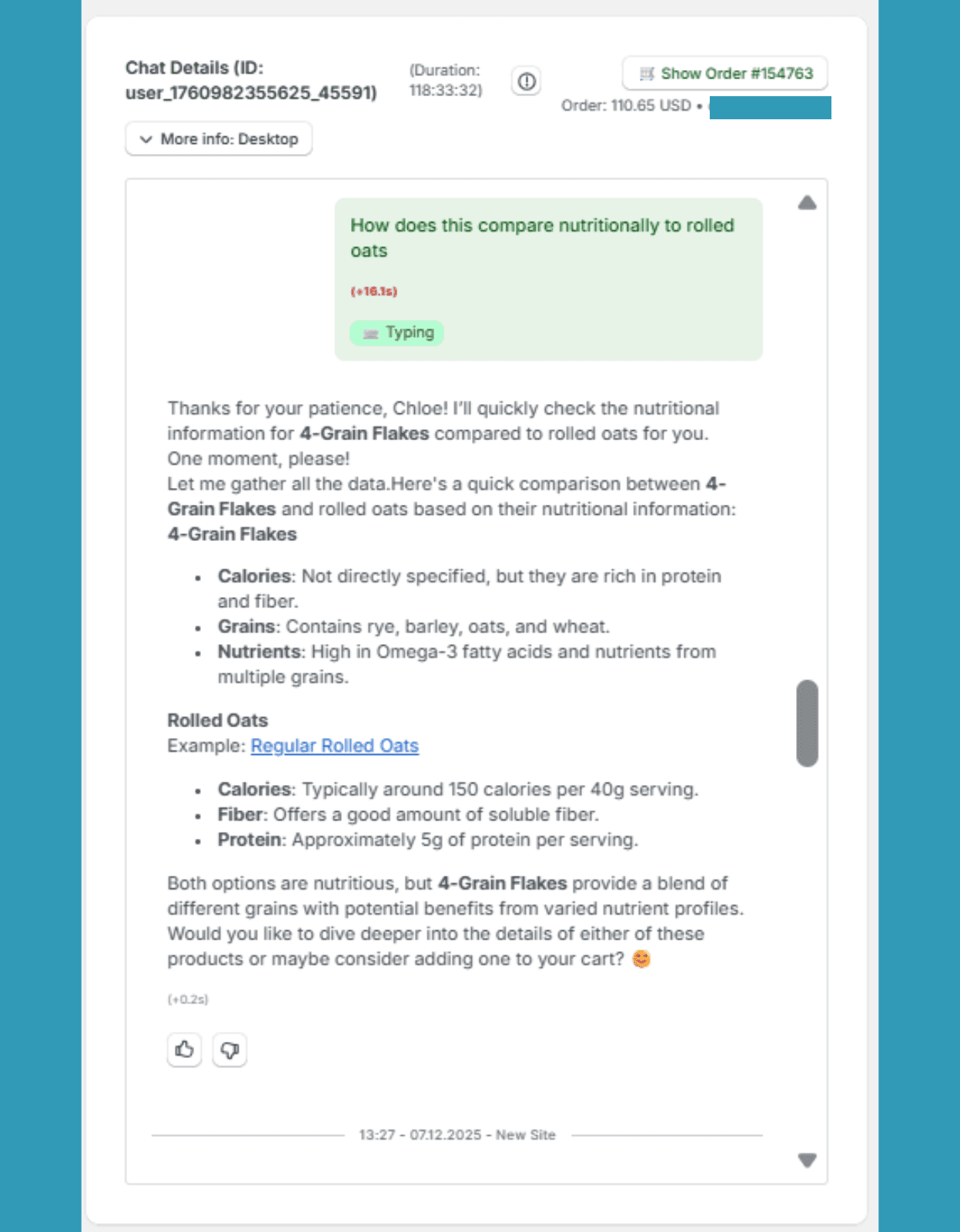
Third, the bot looks lost as soon as a question becomes even slightly nuanced. Ask about "shipping time to Germany" and it might manage. Ask, "I'm between two sizes, what should I pick?" or "Is this really worth the price compared to X?" and the answers suddenly become vague, generic, or flat-out unhelpful.
And then there's the big one:
If you imagine turning your chatbot off tomorrow and you honestly believe nothing significant would change in your conversion rate or revenue… then you already have your answer. You don't have a sales layer. You have a talking FAQ.
That's not a crime, but it is a missed opportunity.
How AI Agents Patch the Funnel, Stage by Stage
Now flip the picture and imagine an agent that behaves much closer to a human associate in a physical store. The difference shows up at every step of the funnel.
At the top: from aimless browsing to guided discovery
A new visitor lands on your site and starts with something vague:
"Looking for running shoes for everyday use. I'm not a pro."
Instead of tossing them into a generic "Running" category, an AI agent asks a couple of smart questions: budget, terrain, typical distance, and then offers a short, clear list of options that actually fit. The user doesn't have to scroll through fifty products wondering what the difference is. They're guided, not dumped.
In the middle: from confusion to confident choice
This is where a lot of carts stall. People aren't sure about size, fit, or which of two similar products is better.
A chatbot sends a link to the size chart.
An AI agent interprets that chart, factors in what similar customers chose and kept, and says:
"Given your height, weight, and preferred fit, most people like you end up happy with size M. I can add that to your cart for you."
Confidence goes up. Hesitation goes down. The cart moves forward.
At the bottom: from doubt to done
Right before checkout, doubts show up:
- "What if it doesn't fit?"
- "What about returns?"
- "Will it arrive in time for the event?"
A static policy page forces the user to break their flow and read legal copy.
An AI agent can explain the parts that actually matter to this person in plain language—yes, returns are free; yes, this will arrive on time if you choose this shipping method; yes, here's how others used this product, and then bring them straight back into the checkout with everything already updated.
The feeling on the shopper's side is simple:
"I'm not alone here. Someone is actually helping me finish this."
That feeling converts.
A 5-Minute Self-Check for Your Store
If you want a quick gut check on whether you're ready for an AI agent, ask yourself a few direct questions:
Can your current chat experience actually sell, or is it only allowed to answer and redirect? Does it know what's in the cart and what the shopper has looked at, or does every conversation restart at zero context? When people raise real objections: price, size, risk, does the bot resolve them, or hide behind policy links?
Then look at the numbers you track. Are you measuring just the number of chats and satisfaction scores? Or can you see assisted revenue, conversion rate uplift for sessions with chat, and whether those users have a higher AOV thanks to better product and bundle recommendations?
If all you have is "lots of conversations" and no clear revenue story, you don't need more flows. You need a different class of tool.
How to Start Without Breaking Anything
The good news: moving from chatbot to AI agent doesn't have to mean rebuilding everything from scratch. The safest path is to pick one or two scenarios where human-like assistance obviously pays off, and start there.
For most brands, that's product choice for new visitors and size/fit guidance for shoppers who are "almost ready" but still hesitant. You give the agent access to the catalog, cart, and key policies in those specific areas, let it assist in real time, and then watch what happens to your conversion rate in those journeys.
The important part is how you evaluate success. Don't let yourself get hypnotized by "engagement." Instead, track whether those assisted sessions:
- Convert more often than unassisted ones,
- Bring in more revenue per visitor,
- Lead to fewer returns and fewer repetitive support tickets.
If those curves move, you're not experimenting anymore. You're upgrading your sales layer.
If Your Chatbot Vanished Tomorrow…
Here's the simplest way to frame the whole question:
If your chatbot disappeared tomorrow and your store's numbers stayed the same, nothing is really at stake. You can live without it.
But if an AI agent disappeared, one that's woven into your catalog, your cart, your promos, and your customer journeys, you'd feel it immediately in your revenue, your support load, and your customer experience. That's the difference you're ultimately aiming for.
If you suspect your current chatbot is quietly leaking conversions, now is the moment to do something about it, not by adding more scripts, but by giving chat the power and context to actually sell.
Want to see what that could look like in your store?
Book a free consultation: we'll walk through your existing chat flows, identify where you're losing buyers, and outline where an AI agent can start paying for itself without ripping out what already works.

Anna Moroz
About author
Anna Moroz is a seasoned copywriter and content producer with over 10 years of experience across the EdTech and tech industries. She has led content teams at international companies and contributed to communication and content strategies for European and global tech, oil & gas, and cultural companies.

Master Agentic Commerce
Join Shopify founders receiving weekly insights on AI agents and autonomous growth.
Trusted by top Shopify Plus brands